Falsifying the Network-State

The “Network-State” is a meme that will change its definition to compensate for being nonsensical in its premises. One typical definition is that it will “crowdfund territory”. I will use a simple thought experiment to demonstrate how this misunderstands things in a “chicken-and-egg” sense. The agreement to purchase territory requires a way to formally recognize the property right to start with. Historically this is by dominance hierarchy ledger. Balaji assumes (I suppose) that “blockchain” can be used but misses the point that the “blockchain” is already a result of an agreement, the majority vote to secure the ledger.

This majority vote fills the role of the “nation” in a nation-state. Anyone can easily see this with thought-experiment: do “one person, one unit of stake”, and the “blockchain” suddenly mutates to indistinguishable from the nation-state. It is common-sense and very easy to see, that the “blockchain” will become the nation-state, and that it follows that the “mining” and majority vote filled the role of “nation”.
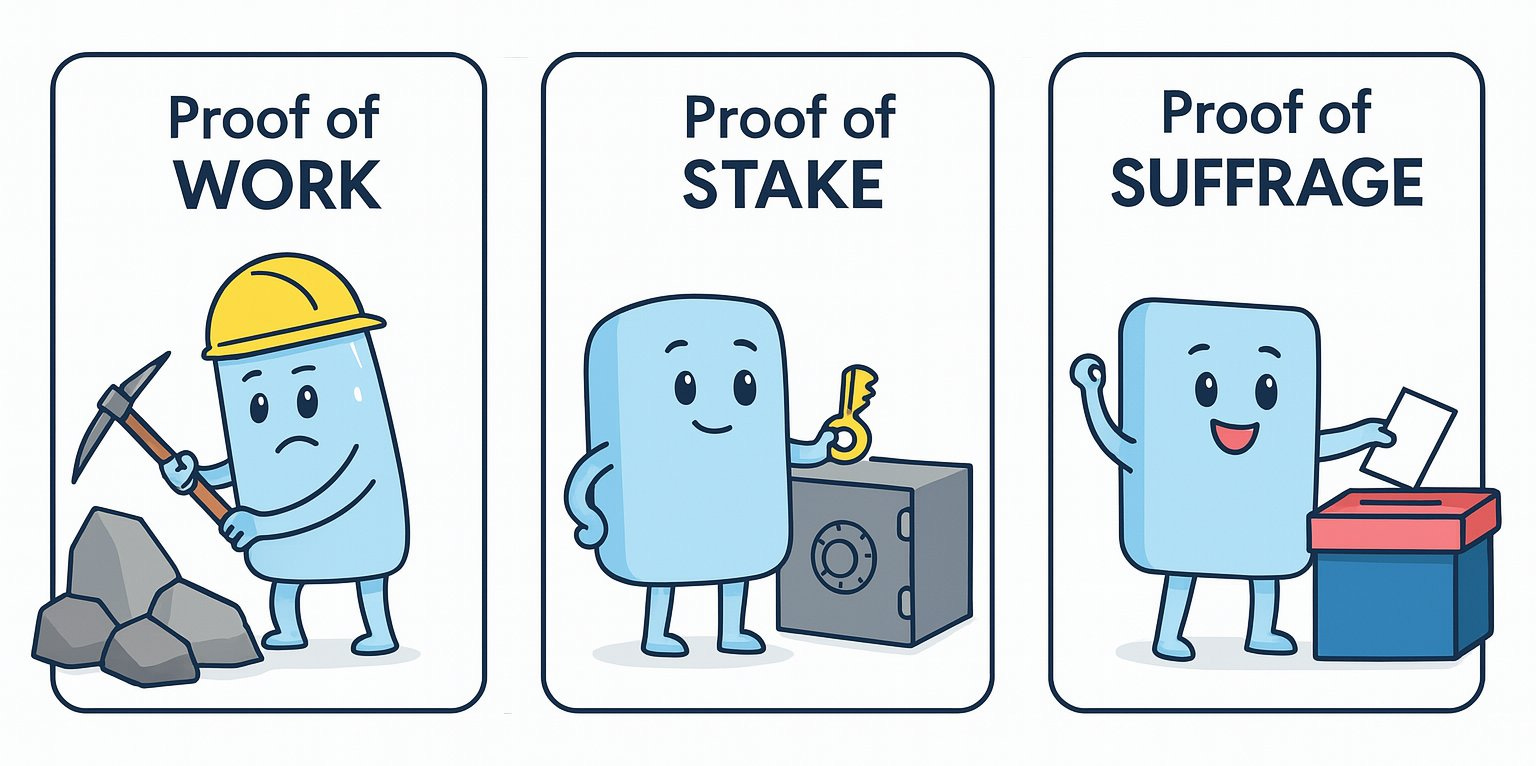
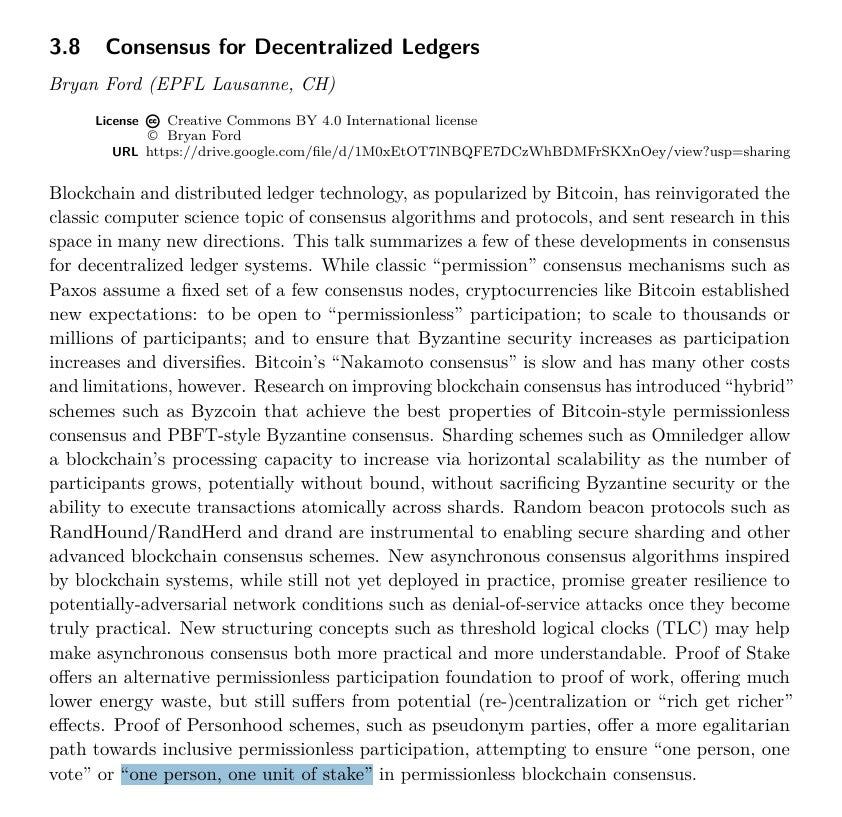
“Network-State” skips over a number of important steps and components in social organization and in doing so it can pretend to be a meaningful idea, just like a “pop-up city” (a few hundred or more people travelling to a conference with a few conferences happening at the same time) are somehow a “city”. It misunderstands what a city is, and Balaji misunderstands what a nation is and the state (historically and in the future) is.
Since Satoshi (Craig) gave the world “blockchain”, everyone takes it for granted, much like the fish is not aware they swim in the ocean. Balaji ignores the chicken-and-egg (is not aware of it even) and takes things for granted. The Nakamoto consensus is the nation. There will be a global singleton, a global nation-state. The “Network-State” (and “BitNation” before it) is a false vision from people who - for one reason or another - hate the dominant system. I agree the dominant system has problems, flaws - I think few would disagree with this - but it is the best we have managed to come up with, and it is the shape of things to come.
The true future global nation-state is probably built on Bitpeople, that developed out of “BitNation” and led to a true paradigm shift (rather than a role playing game as such organization was mostly otherwise, with very contradictory and fragmented ideas circulating in it and no sense of what it was, it loved majority vote if it was by cpu-vote or coin-vote and hated it if it was by people-vote and it was just very nonsensical overall - but, it inspired the future).

The advances towards “one person, one unit of stake” digital ledgers will include every country in the world starting to run their own sovereign “national ledgers”, as well as a global system that runs Bitpeople, a true “bit-nation” (that grew out of “BitNation” as the logical conclusion to it, and in doing so outgrew that organization’s false vision). This will all be great. For the “national ID” advances (prior to Bitpeople) I recommend “Universal Designated Verifier Signature” technology that is now 20 years old, see https://link.springer.com/chapter/10.1007/978-3-540-40061-5_33.
You're missing the forest for the trees. The Blockchain is as much of a tool as is social media for organization (including organizing on land). On consensus, hell even Bitcoins blockchain is itself a meme (in that, miners spend so much on hardware and electricity because they believe and enforce the law of code). Any 51% coordinated vote to change the rules like the 21 million cap, is totally possible.